
Cantonese Wedding Traditions: The Complete Guide to Tea Ceremony, Guo Da Li, Banquet & Return Visit 的複本
By Cetusphoto — Vancouver Wedding Photography Studio

I've photographed Cantonese weddings across Vancouver, Richmond, and Burnaby for 10 years now — from intimate tea ceremonies in family living rooms to twelve-course banquets at Floata and Sun Sui Wah.
What I've come to understand is this: a Cantonese wedding isn't a single event. It's four. Most of my couples are first or second generation Cantonese Canadians, raised between two cultures and trying to honor both without choosing one. The weddings that work — the ones that move people to tears, the ones that produce photographs families will frame for fifty years — aren't the ones that pick "Chinese" or "Western." They're the ones that thread tradition through the whole celebration, with intention. Here are the four pillars every couple, and every wedding photographer should understand.
What Are the Four Pillars of a Cantonese Wedding?
For couples celebrating in Vancouver, Toronto, San Francisco, or New York, a Cantonese wedding is rarely a single Western ceremony. It is a layered cultural journey that begins weeks before the wedding day and continues long after the last toast. The four core Cantonese wedding traditions every couple, planner, and photographer should understand are:
Guo Da Li (過大禮) — the formal betrothal exchange
The Tea Ceremony (敬茶) — the emotional heart of the wedding day
The 12-Course Banquet (十二道菜婚宴) — the public celebration
The Return Visit (回門) — the closing family gathering Together, they form the emotional architecture of the entire celebration.

1. Guo Da Li (過大禮) — The Betrothal
Held two to four weeks before the wedding day, Guo Da Li is the formal exchange of betrothal gifts between the groom's family and the bride's family. It is the moment two families officially recognize the union.Traditional Guo Da Li Gifts Checklist:

The bride's family returns a portion of the gifts (回禮) to maintain harmony between the two households.
Modern luxury tip: Guo Da Li has become a beautifully photographable private moment — a rare opportunity to capture multi-generational portraits in heritage attire.
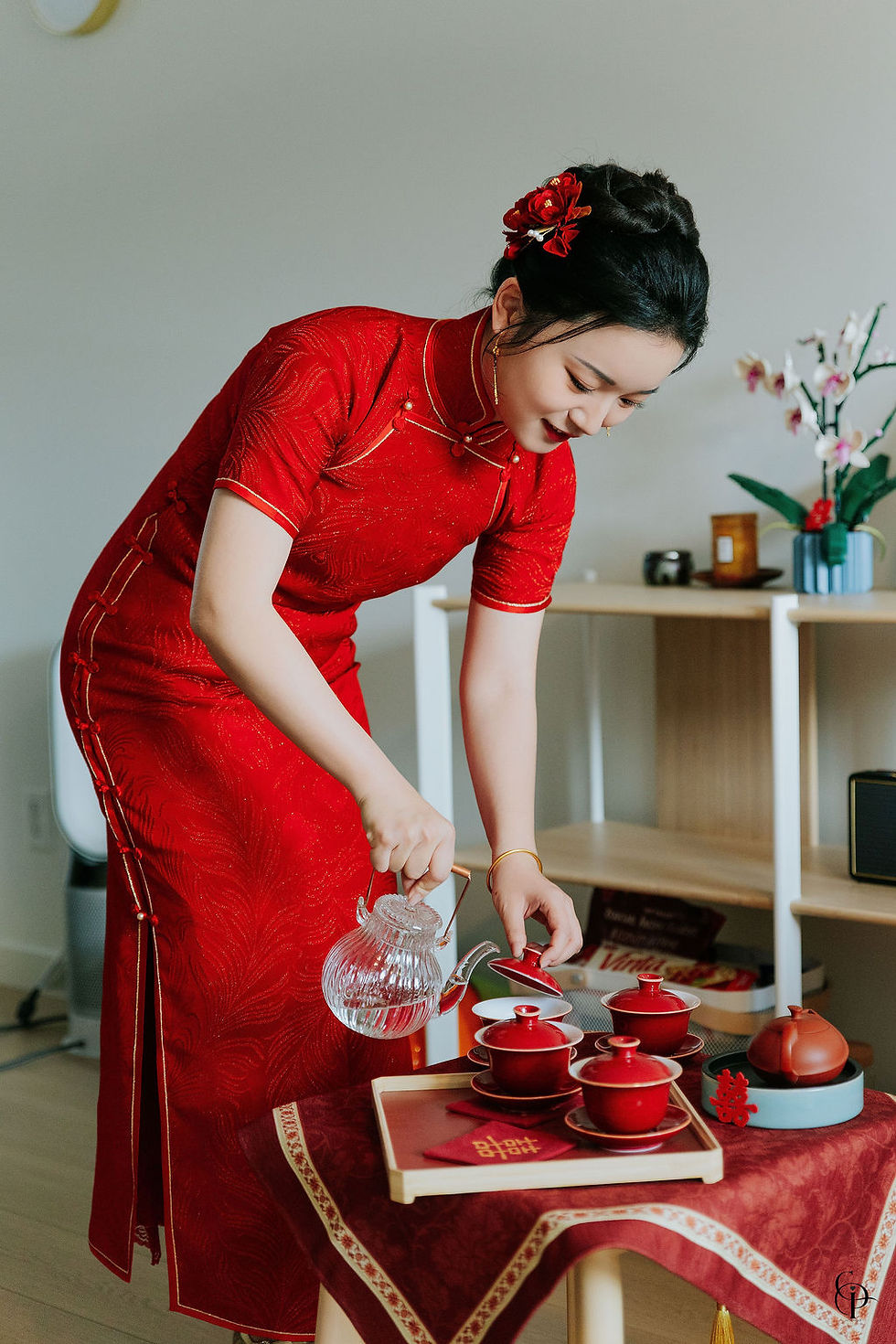
2. The Tea Ceremony (敬茶) — The Emotional Heart
The tea ceremony is the single most emotionally significant ritual of a Cantonese wedding. It usually takes place on the morning of the wedding day, before the Western ceremony or evening banquet.

On the morning of the wedding day, the couple kneels before the groom's parents (or the bride's, depending on family tradition), addresses each elder by their formal title, and presents tea with both hands. The elder drinks, offers blessings, and gifts a red envelope or gold jewelry. The couple repeats this in strict order of seniority — grandparents, parents, aunts, uncles, elder siblings.
What's in the Tea?
The ceremonial tea contains:
1. Red dates — symbolizing prosperity
2.Lotus seeds — early arrival of children
3.Dried longan — sweetness and wholeness

The bride traditionally wears the Qun Kwa (裙褂) — a fully embroidered red-and-gold twopiece dress.

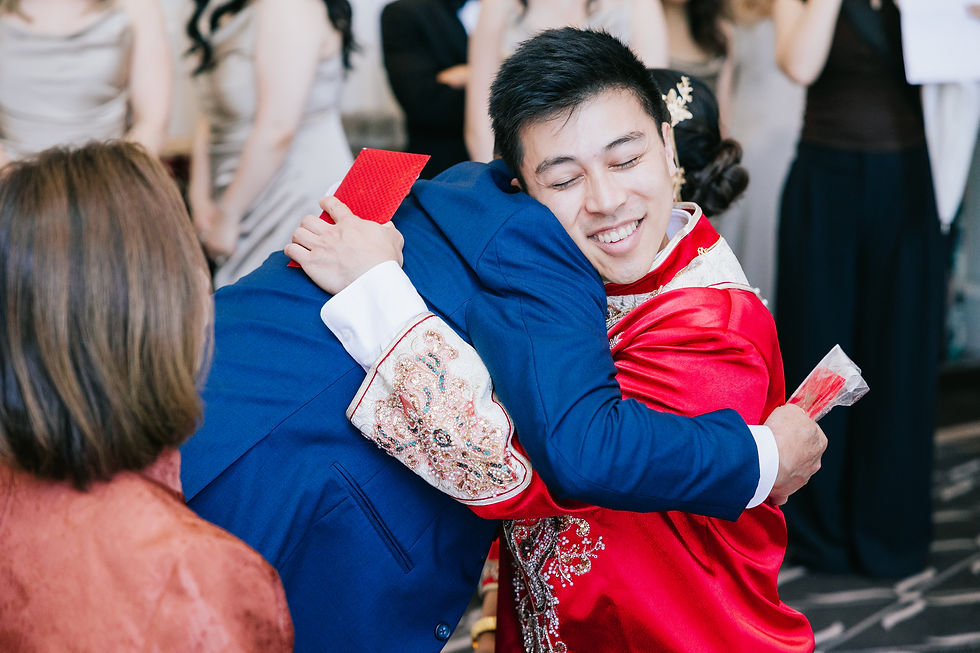
3. The 12-Course Banquet (十二道菜婚宴)
The Cantonese wedding banquet is where the celebration goes public. Traditionally held in a banquet hall or upscale Chinese restaurant, a typical menu includes 10 or 12 dishes, symbolizing "complete perfection" (十全十美) — or one dish for each month of happiness in the year ahead.

Each dish is announced with auspicious phrases. The couple traditionally changes into multiple outfits — the Qun Kwa for the tea ceremony, an evening gown for the reception, and a qipao or tuxedo for table greetings. What I look for: Banquets are the hardest part of the day to shoot well. Low light, dense rooms, fast scale. The good frames aren't the staged toasts — they're the parents watching their child greet table after table, exhausted and glowing.

4. The Return Visit (回門)
Three days after the wedding, the couple visits the bride's family. Historically, the bride's first chance to return to her childhood home as a married woman. Today, often a relaxed dim sum lunch.
Today, the Return Visit is a relaxed, intimate gathering , often a dim sum lunch. The Modern Return Visit Luxury couples are reimagining this ritual as a chic brunch event: Curated florals in soft Morandi tones A more relaxed dress code (the bride may wear a white or champagne qipao) Intimate family portraits A softer, less choreographed photography opportunity
What I look for: This is the most under-shot moment of the entire wedding cycle — and visually, one of the most rewarding. Softer light. Slower pace. The bride out of her Qun Kwa, into a champagne qipao or even just a white dress. The family finally allowed to exhale.

Why Cantonese Wedding Traditions Still Matter Today ?
Cantonese wedding traditions aren't checklist items — they are the emotional architecture of the entire celebration. The most sophisticated couples and planners today don't choose between "Western" and "Chinese." They thread tradition through the entire experience with intention, beauty, and reverence. If you're planning your Cantonese wedding in Vancouver, the Greater Toronto Area, or anywhere across North America, the question isn't which traditions you include it's how beautifully you choose to honor them.
Frequently Asked Questions
How long does a Cantonese tea ceremony take?
A traditional Cantonese tea ceremony typically takes 45 minutes to 90 minutes, depending on the number of elders being honored. Large extended families may take up to two hours.
What does the bride wear during a Cantonese tea ceremony?
The bride traditionally wears a Qun Kwa (裙褂) — a red-and-gold embroidered two-piece dress. Modern luxury brides may opt for a champagne or ivory Qun Kwa for a softer aesthetic.
How much should I give in a red envelope (利是) at a Cantonese wedding?
For close family, red envelope amounts range from $200 to $1,000+ CAD depending on relationship and region. For wedding guests attending the banquet, a typical amount in Vancouver and Toronto is $150–$300 per person.
Can I have a Cantonese tea ceremony without a Chinese banquet?
Yes. Many modern couples honor the tea ceremony as the cultural cornerstone, then host a Western-style reception instead of a 12-course banquet. The tea ceremony alone fulfills the most important familial obligation.
Currently Booking Cantonese Weddings — 2026 & 2027
I take on a limited number of cultural weddings each year. Every booking includes a pre-wedding planning session where we walk through tea ceremony sequencing, family seniority order, banquet timing, and the cultural moments that matter most to your parents and grandparents. If that sounds like the kind of care your wedding deserves, here's how to start: → DM "Cantonese" to @cetusphoto on Instagram and let's talk through your wedding day !


Comments